
Data Protection in Rwanda: How the Public Sector Is Building Real Compliance Capacity in 2026
Data protection in Rwanda is no longer a future obligation. It is a present accountability, and last week in Kigali, that accountability was put into practice.
From 15 to 19 June 2026, Data Protection Officers from across Rwanda’s public sector gathered at the National Institute of Statistics of Rwanda across two intensive two-day cohorts running between Monday 15 and Friday 19 June , structured, intensive, and grounded in the daily realities of what it means to protect the personal data of Rwandan citizens inside a government institution.
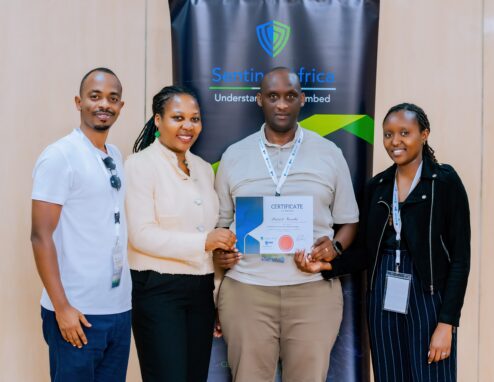

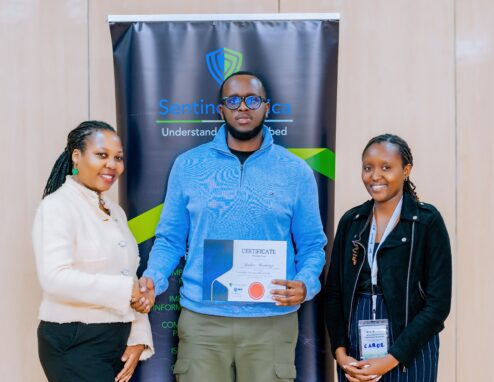
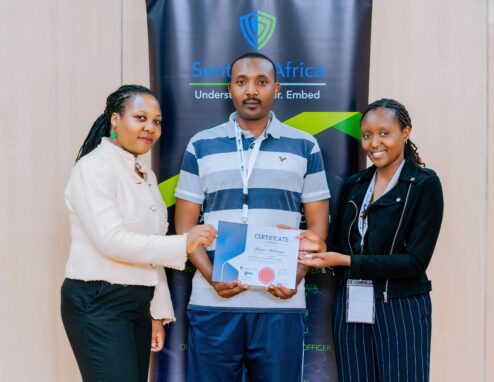
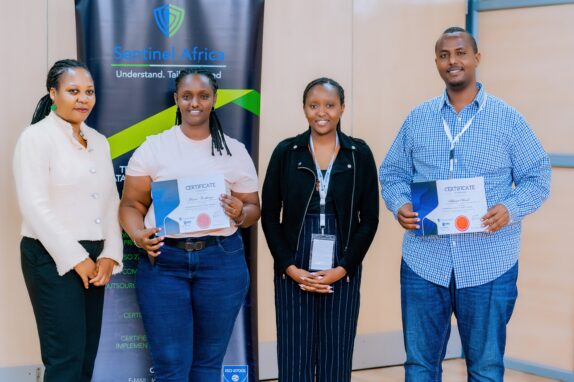
Sentinel Africa Consulting delivered the programme in collaboration with Rwanda’s Data Protection and Privacy Office.
This is what happened, and why it matters for every organisation operating under Rwanda’s data protection law.
Why Data Protection in Rwanda Has Entered a New Phase
Rwanda’s data protection framework began with Law No. 058/2021, gazetted on 13 October 2021. Since mandatory registration with the Data Protection and Privacy Office became enforceable in October 2023, the obligations on organisations have been clear.
Designate a Data Protection Officer. Maintain records of processing activities. Obtain informed consent. Implement technical and organisational safeguards. Report breaches promptly.
But the Data Protection and Privacy Office has been consistent throughout 2026: compliance with Rwanda’s data protection law is beyond registration. It is a continuous journey that requires the people inside every institution, not just their legal teams, to understand what the law requires of them in practice.
That message drove the design of last week’s programme.
What the Data Protection Training in Rwanda Covered


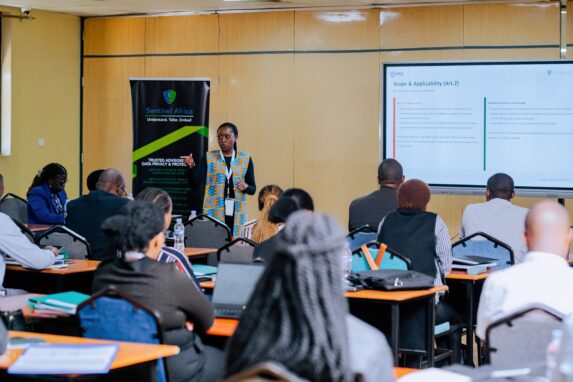


The four-day programme was built around practical application, not theory. Each module addressed a specific obligation that Data Protection Officers in Rwanda’s public sector face on an ordinary working day.
Data Subject Rights and Data Protection in Rwanda’s Public Sector
Rwanda’s data protection law gives citizens specific rights over their personal data, the right to access, correct, erase, and object to processing. Rwanda’s law also grants a right with no GDPR equivalent: the right to designate an heir to one’s personal data. These rights do not arrive as legal abstractions. They arrive as requests, at reception desks, in emails, through complaints.
Participants worked through how to receive, assess, and respond to data subject requests in a way that is legally compliant, institutionally consistent, and practically manageable.
Complaint Handling Under Rwanda’s Data Protection Framework
When a data subject believes their rights have been violated, the institution holding their data must respond. The training equipped public sector DPOs with structured approaches to complaint intake, investigation, documentation, and resolution, building consistent practice across participating institutions.
Data Breach Investigation and Notification
A data breach in a public institution is a legal event. Rwanda’s data protection law imposes specific notification obligations to the Data Protection and Privacy Office and, in many cases, to affected individuals. Participants worked through real breach scenarios, from identification and containment to assessment, notification, and post-incident review.
Technical and Organisational Measures
What does adequate data protection look like inside a government ministry? The training addressed this question directly, covering data mapping, Privacy by Design, access controls, processor agreements, and the practical steps institutions must take to demonstrate accountability under Rwanda’s data protection framework.
The Institutions in the Room
Every participant in last week’s data protection training in Rwanda represented a public institution holding sensitive personal data about Rwandan citizens.
Tax records. Health information. Identity data. Social protection records. Land ownership documentation. More than 60 public institutions were represented; ministries, regulators, hospitals, and agencies spanning health, justice, education, finance, land, transport, and security.
This is not commercial data. It is the information that citizens share with their government because they have no choice, data provided in trust, with no ability to opt out.
That absence of choice makes the obligation to protect it not just a legal requirement but a matter of institutional integrity and public trust.
Of the institutions represented, fewer than half currently have a published privacy policy, exactly the gap this training was designed to help close.
Rwanda’s penalties for non-compliance are real. Administrative fines for failures like missing registration or a missing DPO of up to RWF 5,000,000 or 1% of global turnover. Potential criminal liability for serious violations up to RWF 25,000,000 for unlawfully processing sensitive data, and up to 5% of annual turnover where a corporate body is convicted. Reputational damage that is significantly harder to quantify and longer to recover from than any financial penalty.
The DPOs trained last week left Kigali better equipped to meet that responsibility than when they arrived on Monday morning.
Sentinel Africa’s Role in Advancing Data Protection in Rwanda
Sentinel Africa Consulting’s engagement with Rwanda’s public sector reflects a consistent approach to capacity building, practical, contextual, and immediately applicable.
The programme was designed around Rwanda’s legal framework specifically, not adapted from a generic data protection curriculum. Scenarios were grounded in the operational realities of Rwandan public institutions. Obligations were referenced directly to Law No. 058/2021 and the Data Protection and Privacy Office’s published guidance.
Sentinel Africa holds ISO 27701 certification, the internationally recognised standard for Privacy Information Management Systems, developed by the International Organisation for Standardisation. This means the team delivering data protection training in Rwanda is itself governed by the highest international standard for privacy management.
For institutions looking to build deeper internal capability, Sentinel Africa’s training division offers structured programmes including PIMS Implementation against ISO/IEC 27701 and GDPR Data Protection Officer certification, available as public class, in-house, and self-study options across Kenya, Uganda, and Rwanda.
5 Things Last Week’s Training Revealed About Data Protection Readiness in Rwanda’s Public Sector
- The law is known. The practice is still being built.
Most participants understood the existence of Rwanda’s data protection obligations. The training gap was in translating those obligations into repeatable, documented institutional practices. - Data breaches are the area of greatest anxiety.
Across the four days, breach notification generated the most discussion, particularly around timelines, thresholds, and what constitutes a reportable incident. This is an area where clear internal procedures make an enormous practical difference. - Data subject rights are arriving faster than institutions are prepared for.
As public awareness of data protection rights grows in Rwanda, requests from citizens to access, correct, or erase their data are increasing. Public sector institutions need structured processes for handling these requests consistently. - Third-party data sharing is a significant unmanaged risk.
Many public institutions share personal data with vendors, implementing partners, and other government entities without formal data processing agreements in place. This is one of the most immediate compliance gaps requiring attention. - Culture is the hardest and most important variable.
Technical controls can be implemented in weeks. Shifting the organisational culture, so that every staff member treats personal data as something that belongs to a person, not to the institution, takes sustained effort, consistent leadership, and ongoing training.
What This Reflects About Rwanda’s Data Protection Trajectory
Last week’s training did not happen in isolation.
It is part of a deliberate, sustained effort by the Data Protection and Privacy Office to build enforcement capacity from the inside out, ensuring that Rwanda’s public institutions have the knowledge, skills, and governance frameworks to implement the law effectively.
Rwanda has consistently demonstrated that its approach to digital governance is serious and forward-looking. The Data Protection and Privacy Law, the mandatory registration framework, the ongoing stakeholder consultation process on draft regulations, and structured capacity building for public sector DPOs, these are the sequential steps of a country building a data protection ecosystem that functions.
The Data Protection and Privacy Office continues to make clear that compliance does not end with registration. Every decision about how personal data is collected, stored, shared, and protected carries legal and ethical weight.
The institutions that build genuine internal capability to act on that message will be the ones that maintain the trust of the citizens they serve.
Building Data Protection Capacity in Rwanda: What Comes Next
For public institutions that participated in last week’s programme, the work continues. Training is the beginning, not the end. The practical application of what was covered, updating policies, strengthening procedures, improving breach response plans, establishing data subject request workflows, happens back in the institution, in the weeks and months that follow.
For institutions that did not participate in this cohort, the message is clear: data protection compliance in Rwanda is an active, ongoing obligation. The Data Protection and Privacy Office is building enforcement capacity. The expectations on every registered organisation are rising.
The question for every Director, CEO, and Board Member overseeing a Rwandan public institution is not whether data protection applies to their organisation.
It is whether their organisation is ready.
Sentinel Africa Consulting supports organisations across East Africa on data protection compliance, ISO 27701 implementation, DPO training, and privacy governance. Our team in Kigali works with public institutions, financial services organisations, healthcare providers, and technology companies navigating Rwanda’s data protection framework.
For enquiries about data protection training in Rwanda, DPO capacity building, or ISO 27701 advisory:
📧 [email protected]
🌐 www.sentinelafricaconsulting.com
📍 Kenya · Uganda · Rwanda
No comments yet