
Do You Need ISO 27001 in Uganda? Why More Businesses Are Saying Yes
The Growing Importance of ISO 27001 in Uganda
Not long ago, I sat in a meeting with the management team of a fast-growing fintech company in Kampala. The conversation started like most strategy discussions do, growth projections, partnerships, expansion into the region. But halfway through the meeting, the tone shifted.
The founder leaned back and asked a question that many business leaders in Uganda are now asking:
“Do we really need ISO 27001 certification, or is it just something consultants recommend?”
For years, the honest answer was simple.
ISO 27001 was a best practice.
It was something mature organizations pursued to demonstrate strong information security. Many companies considered it useful, but not strictly necessary.
Today, that answer is changing.
Across Uganda’s financial, telecom, and technology sectors, ISO 27001 in Uganda is quietly shifting from optional best practice to practical regulatory expectation.
Not always written directly into law, but increasingly required by regulators, international partners, and enterprise clients who want proof that organizations can protect the information they hold.
Why Information Has Become a Core Business Asset

To understand why this shift is happening, we need to start with a reality many businesses are just beginning to appreciate.
Data has become the core asset of modern businesses.
Take a moment and think about how most businesses in Kampala operate today.
- Banks process millions of digital transactions.
- Telecom operators manage vast subscriber databases.
- Hospitals store sensitive medical records electronically.
- Fintech companies run entirely on digital platforms.
In each case, the organization’s most valuable asset is not the building, the computers, or even the software.
It is information.
- Customer identities.
- Transaction records.
- Employee data.
- Confidential contracts.
And when something goes wrong with that information, the consequences can move very quickly from technical inconvenience to business crisis.
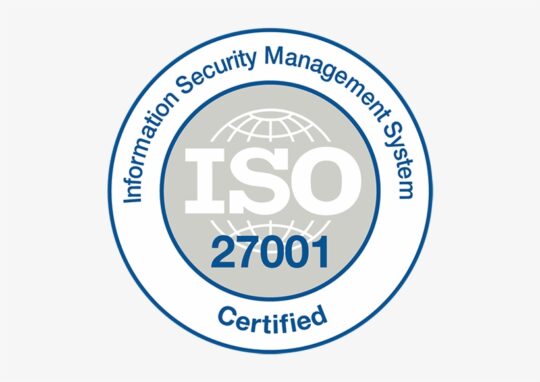
This is where frameworks like ISO/IEC 27001 enter the conversation.
What ISO 27001 Actually Does
At its core, ISO 27001 provides a structured way for organizations to manage information security risks. Instead of focusing only on technology, the framework looks at the entire ecosystem of how information is handled.
It asks organizations to examine three critical areas:
• People, who has access to sensitive information
• Processes, how data is collected, stored, and shared
• Technology, what systems protect that data
The result is something known as an Information Security Management System, a coordinated set of policies, controls, and procedures designed to ensure information remains secure.
But in Uganda, the importance of ISO 27001 in Uganda is no longer just about operational maturity. It is increasingly about compliance and credibility.
The Regulatory Environment in Uganda
Uganda’s digital economy has grown rapidly over the last decade, and regulators are paying close attention. The introduction of the Data Protection and Privacy Act marked a major step toward formal data governance. The law places clear obligations on organizations that collect and process personal data.
While the legislation does not explicitly mandate ISO certification, it requires organizations to implement adequate technical and organizational safeguards to protect personal information. That phrase, adequate safeguards, is where many organizations encounter a practical challenge.
How do you prove to regulators, partners, or customers that your security controls are actually adequate?
For many organizations, ISO 27001 in Uganda has become the most widely recognized answer.
Institutions regulated by bodies such as:
• Bank of Uganda
• National Information Technology Authority Uganda
• Uganda Communications Commission
are increasingly expected to demonstrate structured, documented approaches to information security.
Frameworks like ISO 27001 provide a clear, internationally recognized way to do that.
The Real Cost of Not Implementing ISO 27001
At this point in the conversation, another concern usually comes up often from founders, CFOs, or operations directors.
“Implementing ISO 27001 sounds expensive.”
And to be fair, they are not wrong.
Achieving certification requires investment. Organizations must review processes, strengthen controls, train staff, and in many cases redesign how information flows through the business.
There are also practical costs:
• Consultancy and advisory support
• Internal staff time and training
• Security tools and infrastructure improvements
• Certification and audit fees
For a growing Ugandan business managing tight budgets, these costs can initially feel difficult to justify. But here is the strategic perspective many leaders eventually arrive at.
The real question is not “How much does ISO 27001 cost?”
The real question is:
“What is the cost of operating without structured information security?”
Because when a security incident happens, the financial and reputational damage often far exceeds the investment required to prevent it.
- Lost customers.
- Operational downtime.
- Regulatory scrutiny.
- Damaged partnerships.
Suddenly, the cost conversation looks very different.
Supply Chain and Partnership Pressure
Regulators are only part of the story. Another powerful driver of ISO 27001 in Uganda adoption is supply chain pressure.
Consider a Kampala based technology company seeking a partnership with an international organization. The business proposal may be strong. The product may be innovative. But before the partnership is approved, the international partner asks a simple question:
“Can you demonstrate your information security controls?”
Suddenly the conversation moves into unfamiliar territory:
• Do you conduct formal risk assessments
• Do you have an incident response process
• Are employee access rights reviewed regularly
• How do you monitor security events
Without a structured framework, answering those questions can become extremely difficult. ISO 27001 provides a language that global organizations already understand. It signals that the organization operates according to internationally recognized security practices.
For companies looking to expand beyond Uganda or even within East Africa, that credibility matters.
Why Information Security Is a Cultural Issue
Many organizations initially assume that ISO 27001 is primarily an IT project.
In reality, the biggest challenges are usually cultural.
Information security failures often occur because of small everyday decisions:
- An employee shares confidential files through personal email for convenience.
- A staff member reuses the same password across multiple systems.
- A visitor logbook at reception exposes phone numbers and ID details of every previous guest.
These are not sophisticated cyberattacks. They are cultural weaknesses.
A strong information security framework forces organizations to address those behaviours. It requires leadership to establish clear rules, provide training, and ensure accountability across every department not just the IT team.
A Shift Many Leaders Are Now Recognizing
In conversations with business leaders across Kampala, one pattern is becoming clear. Organizations that treat information security proactively tend to view ISO 27001 in Uganda as a strategic investment.
Those that delay the conversation often encounter it later under less comfortable circumstances during a regulatory audit, after a security incident, or when a major client requests proof of security controls.
By that point, the decision is no longer about best practice.
It becomes about damage control.
A Final Thought
Every organization that handles information is ultimately managing trust.
Customers trust companies with their identities.
Employees trust employers with their personal records.
Partners trust organizations with confidential business data.
When that trust is broken, rebuilding it is far harder than protecting it in the first place.
Perhaps that is why ISO 27001 in Uganda is quietly moving from being a best practice to something closer to a business necessity.
Not because regulators demand it. But because in a digital economy, trust must be engineered, not assumed.
Preparing for ISO 27001 in Uganda

As more organizations across Uganda formalize their approach to information security, frameworks like ISO 27001 are becoming increasingly relevant.
For organizations looking to understand where they stand, or how to approach implementation, engaging in a structured conversation around information security readiness can provide valuable clarity.
Article By Ivan Kato Sejinja
Associate, Sentinel Africa Consulting

No comments yet